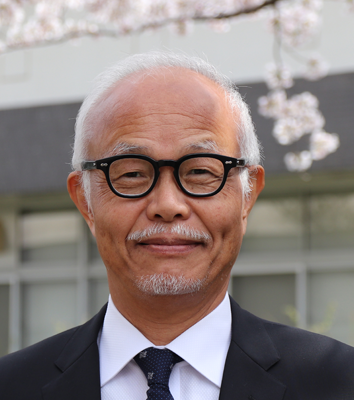
Yoshiki Saito
Commendation
For outstanding contributions to the study on sedimentation and environmental change in the land-sea transition zone
A list of five major papers
- Saito, Y. (1991) Sequence stratigraphy on the shelf and upper slope in response to the latest Pleistocene-Holocenesea-level changes off Sendai, northeast Japan. In: Macdonald, D.I.M. ed., Sedimentation, Tectonics and Eustasy:Sea‐Level Changes at Active Margins, International Association of Sedimentologists Special Publication, no. 12,p. 133–150.
- Saito, Y., Wei, H., Zhou, Y., Nishimura, A., Sato, Y., Yokota, S. (2000) Delta progradation and chenier formationin the Huanghe (Yellow River) Delta, China. Journal of Asian Earth Sciences, vol. 18, p. 489–497.
- Saito, Y., Yang, Z., Hori, K. (2001) The Huanghe (Yellow River) and Changjiang (Yangtze River) deltas: a reviewon their characteristics, evolution and sediment discharge during the Holocene. Geomorphology, vol. 41, p.219–231.
- Saito, Y., Ikehara, K., Tamura, T. (2016) Coastal geology and oceanography. In: Moreno, T., Wallis, S.R., Kojima,T., Gibbons, W. eds., The Geology of Japan. Geological Society of London, p. 409–430.
- Gugliotta, M., Saito, Y., Nguyen, V.L., Ta, T.K.O., Nakashima, R., Tamura, T., Uehara, K., Katsuki, K.,Yamamoto, S. (2017) Process regime, salinity, morphological, and sedimentary trends along the fluvial tomarine transition zone of the mixed-energy Mekong River delta, Vietnam. Continental Shelf Research, vol.147, p. 7–26.
Major achievements
Dr. Saito has significantly contributed to research on the geological layer formation and environmental changes at the land-ocean boundary. His brand-new and interdisciplinary study across sedimentary geology, geomorphology and Quaternary research from the aspect of material circulation on the Earth’s surface and glacial sea level change has been highly and internationally evaluated. Moreover, he developed a new method to unravel the relationship between sea level change and geological layer formation by high-resolution radiogenic carbon geochronology on boring cores of sediment, depicting the isochronous planes. Such results were culminated in his excellent research targeting on Asian mega-delta such as Yellow River, Yangtze River and Mekong River. Through a suite of his studies, Dr. Yoshiki Saito contributed internationally to human resource development. Recently, he is promoting an international collaborative study on vulnerability of these deltas as a hotspot of anthropogenic activities. He successfully invited the quadrennial international conference of INQUA to Japan for the first time as a chairperson and widely disseminated the Japanese research achievements to all over the world. Through successive positions of JpGU and related academic societies, he has outstandingly contributed to developing academic exchanging.
[ ORCiD ]
Nominator
Toshihiko Sugai
Supporters
Hori Kazuaki, Steven Goodbred Jr., Kawahata Hodaka