Plenary Lectures
Commemorating the JpGU-AGU Joint Meeting 2026 since 2020 and recognizing the meeting theme of “transformative science for life & Earth,” we present Plenary Lectures at the Makuhari Messe Conference Hall A starting at 12:30 through 13:30 from Monday (no parallel sessions or events in general). The daily schedule is on the right (click to enlarge). Abstracts are available on this page below.
We sincerely hope many researchers will join us, discover new opportunities through these talks, and help realign Earth and planetary sciences toward transformative change. Our speakers challenge us to see the paths ahead more clearly, reconsider the purpose of science, and explore how we can do better. Online access will be made available as with all the scientific sessions from the program timetable after registrants login.
We sincerely hope many researchers will join us, discover new opportunities through these talks, and help realign Earth and planetary sciences toward transformative change. Our speakers challenge us to see the paths ahead more clearly, reconsider the purpose of science, and explore how we can do better. Online access will be made available as with all the scientific sessions from the program timetable after registrants login.
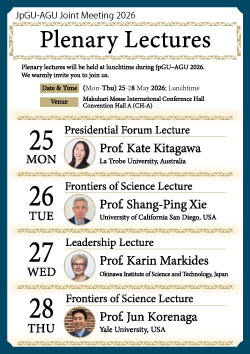
Presidential Forum Lecture : Mon, 25 May
A Space-Age Conversation:
“Thriving in the Space Age: Global Science, New Opportunities, and Expanding Networks”
“Thriving in the Space Age: Global Science, New Opportunities, and Expanding Networks”
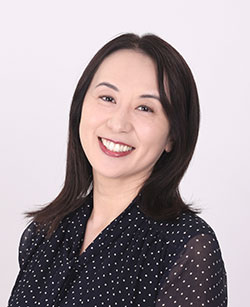
Prof. Kate Kitagawa
La Trobe University, Australia
La Trobe University, Australia
Kate Kitagawa is a specialist in space education and is currently Professor of Practice in Space Research and Education at La Trobe University. Prior to her recent move to Melbourne, Australia, she worked at the Japan Aerospace Exploration Agency (JAXA) as Advisor to the Senior Vice President and Director of the Space Education Office. In this role, she represented JAXA in international space forums and chaired the International Space Education Board at the 2023 International Astronautical Congress, working with space agencies from around the world. She is deeply committed to expanding global access to education and has focused on developing learning modules and curriculum.
Kate holds a BSc in mathematics and life sciences from the University of British Columbia, Canada, and a PhD in history from Princeton University, USA. Her earlier career with Japan’s Ministry of Foreign Affairs and the Permanent Mission of Japan to the United Nations shaped her interest in education as a form of cultural diplomacy, an approach reflected in the history courses she taught at Harvard University. She is also an accomplished author, with a national bestseller in Japan. Her co-authored book, The Secret Lives of Numbers: A Global of History of Mathematics & its Unsung Trailblazers, was shortlisted for the 2024 British Academy Book Prize and has been published in 14 languages worldwide. She regularly appears on television, radio, and digital media as a commentator on science, history, and education.
Thriving in the Space Age: Global Science, New Opportunities, and Expanding Networks
Abstract
In this opening plenary, Professor Kate Kitagawa explores the rapidly evolving landscape of Earth and planetary science. In conversation with JpGU President Simon Wallis and AGU Executive Director and CEO Janice Lachance, the session highlights the power of international partnerships and diverse perspectives in shaping the future of the space workforce. Drawing on her experiences working with space agencies and in emerging fields such as space medicine, the session invites participants to explore new possibilities, engage with emerging opportunities, and help build inclusive space communities.
Frontiers of Science Lecture : Tue, 26 May
Making sense of Pacific Ocean warming patterns and the teleconnections during satellite era
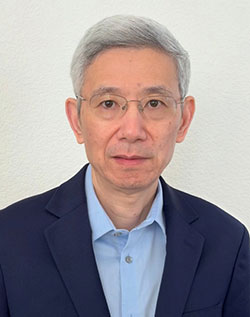
Prof. Shang-Ping Xie
Universy of California San Diego, USA
Universy of California San Diego, USA
Shang-Ping Xie is the Roger Revelle Professor at Scripps Institution of Oceanography, UC San Diego. He graduated from Ocean University of China in Qingdao and received his Ph.D. in physical oceanography in 1991 from Tohoku University, Japan. His research addresses such fundamental questions as how recurrent patterns of climate variability form, how predictable climate is, and how climate will change in the face of increasing atmospheric greenhouse gases. He was a lead author of the Intergovernmental Panel on Climate Change (IPCC) Fifth Assessment Report, which was published in 2013. Dr. Xie is an AGU Fellow and received the Sverdrup Gold Medal from the American Meteorological Society in 2017 for “fundamental contributions to understanding the coupled ocean-atmosphere feedback processes involved in climate variability and climate change.”
Abstract
Most of our planet has warmed, but the eastern tropical Pacific Ocean surface has mysteriously cooled during the satellite era of 1982-2024. What’s troubling is that global climate models fail to simulate this distinctive pattern. We developed a novel numerical experiment by forcing global models with observed wind stress. The experiment faithfully simulates the multidecadal trend pattern in the tropical Pacific. Detailed analysis indicates that unforced internal variability dominates the tropical Pacific change observed during the satellite era, impacting multidecadal trends in the Asian summer monsoon and North Pacific marine heat waves.
Leadership Lecture : Wed, 27 May
Leadership disruption to overcome destruction: Forging system-wide responses to our climate crisis
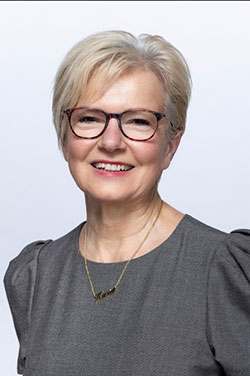
Karin Markides
Okinawa Institute of Science and Technology
Okinawa Institute of Science and Technology
Dr. Karin Markides earned her doctorate degree from University of Stockholm in Sweden and specializes in analytical chemistry. After serving as President and CEO of Chalmers University of Technology in Sweden as well as American University of Armenia, she became President and CEO of Okinawa Institute of Science and Technology in June 2023 and is moving on as President Emerita and Executive Advisor from April 2026.
Dr. Markides is appointed Professor Emeriti of Analytical Chemistry at Uppsala University as well as Elected Member of the Royal Swedish Academy of Engineering Sciences (IVA) and the Royal Swedish Academy of Sciences (KVA), where she has been involved in the selection of the Nobel Prize in Chemistry and the promotion of science for society, schools, and academia.
Dr. Markides is appointed Professor Emeriti of Analytical Chemistry at Uppsala University as well as Elected Member of the Royal Swedish Academy of Engineering Sciences (IVA) and the Royal Swedish Academy of Sciences (KVA), where she has been involved in the selection of the Nobel Prize in Chemistry and the promotion of science for society, schools, and academia.
Abstract
As researchers we are frustrated, impatient, surprised, sad, and angry about the perceived slow transformation in society. The universities have, however, the power to increase societal engagement using interdisciplinary intersections, multi-stakeholder partnerships, transformative innovations, local and global alignment, and developmental leadership. Knowledge alone cannot break the traditional barriers of economic, cultural, and personal drive. Exploratory projects will be needed, guided by the attitude that Nelson Mandela stated "I never lose. I either win or I learn". Benchmark examples and key messages will be used with the aim to spark and inspire time-sensitive academic leadership needed in society.
Frontiers of Science Lecture : Thu, 28 May
On Beginnings: Early Earth, Life, and the Practice of Scientific Creativity
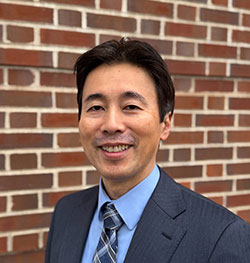
Jun Korenaga
Yale University
Yale University
Jun Korenaga is Professor of Earth and Planetary Sciences at Yale University. His research explores the long-term evolution of Earth and terrestrial planets, with a focus on understanding how Earth became a platform for the emergence and persistence of life. He places particular emphasis on mantle dynamics, viewing it as a central mediator linking planetary interiors, surfaces, and atmospheres over geological time.
Korenaga’s work spans a wide range of problems in geophysics and planetary science, often combining physics, chemistry, applied mathematics, and statistics to revisit long-standing questions from a fundamental perspective. His research philosophy is intentionally broad and integrative, seeking to understand Earth as a coupled system rather than as a collection of isolated components.
Describing himself as a “freestyle geophysicist,” Korenaga has worked on topics including mantle convection, plate tectonics, continental growth, planetary formation, and the evolution of terrestrial planets inside and outside the solar system. Across these diverse areas, his goal is to clarify how deep planetary processes shape surface environments and long-term habitability.
Korenaga’s work spans a wide range of problems in geophysics and planetary science, often combining physics, chemistry, applied mathematics, and statistics to revisit long-standing questions from a fundamental perspective. His research philosophy is intentionally broad and integrative, seeking to understand Earth as a coupled system rather than as a collection of isolated components.
Describing himself as a “freestyle geophysicist,” Korenaga has worked on topics including mantle convection, plate tectonics, continental growth, planetary formation, and the evolution of terrestrial planets inside and outside the solar system. Across these diverse areas, his goal is to clarify how deep planetary processes shape surface environments and long-term habitability.
Abstract
Earth’s history spans four geological eons, yet our ability to reconstruct that history fades rapidly with age. The earliest interval—from the Moon-forming impact to the oldest preserved rocks—remains particularly enigmatic. Understanding this formative period is central to one of the most profound questions in science: how life began on our planet. In this lecture, I will discuss how seemingly simple questions about Earth’s present state can illuminate deep planetary processes and early environments, showing how fundamental questions about Earth remain fertile ground for discovery by the next generation of scientists.